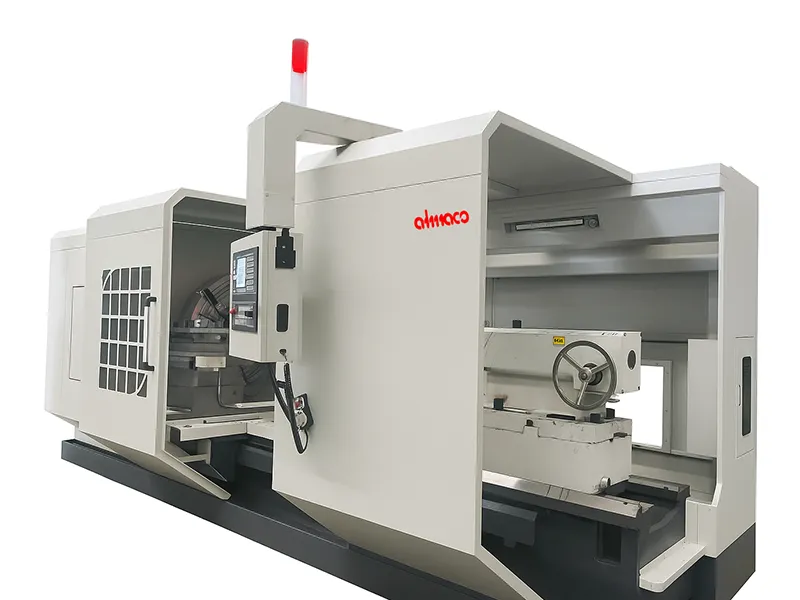
Selecting a CNC lathe is ultimately a matter of matching cutting capability, process stability, and lifecycle support to your specific part mix—not simply picking a familiar logo.
Short‑run, high‑mix job shops, long‑shaft automotive suppliers, and aerospace integrators all demand very different combinations of rigidity, automation, and control sophistication from their turning platforms.
- At the high‑end of multi‑tasking and complex turning, manufacturers such as Mazak, DMG MORI, Okuma, and INDEX focus on integrated turn‑mill centers, multi‑channel controls, and advanced thermal management for tight‑tolerance work.
- For continuous production of shafts, discs, and large rings in automotive and energy environments, brands like EMAG, Takisawa, Romi, and Cincinnati Machines emphasize high‑volume vertical and slant‑bed lathes with robust automation and part handling.
- For buyers prioritizing cost‑effective yet reliable turning capacity—especially in global procurement scenarios—suppliers such as Almaco, Haas, TSINFA, STYLECNC, Victor Taichung, and TAIG provide practical configurations ranging from compact training lathes to heavy‑duty flat‑beds and VTLs.
| CNC Lathe Type | Best For | What Buyers Should Check |
| Flat Bed CNC Lathe | Long shafts, heavy workpieces, general turning | Turning length, bed width, spindle bore, chuck size, tailstock |
| Slant Bed CNC Lathe | Batch production, better chip removal, faster cycle | Turret type, guideway, live tooling option, automation interface |
| Swiss Type CNC Lathe | Long, small-diameter, precision parts | Bar diameter, guide bushing, number of tools, tolerance requirement |
| Vertical Turning Lathe | Large discs, rings, flanges, heavy rotary parts | Table diameter, max load, clamping method, vertical rigidity |
| Turn Mill Center | Complex parts requiring turning, milling, drilling in one setup | Y-axis, live tooling, sub-spindle, CAM support, programming complexity |
| Desktop or Training Lathe | Prototype, R&D, teaching, small parts | Industrial suitability, rigidity, size limit, service support |
This guide reviews leading CNC lathe manufacturers and their turning portfolios, outlining their core technologies, typical applications, and machine envelopes to support informed investment decisions for workshops and production lines in 2026.

How This List Was Evaluated
To keep this overview practical for engineers and buyers, each manufacturer is evaluated on the following core aspects of CNC turning:
- Manufacturing heritage and sector focus: Preference is given to brands with a proven track record in CNC lathes and clear involvement in target sectors such as general machining, automotive, aerospace, medical, heavy industry, or specialized niches.
- Accuracy, rigidity, and stability: Lathes are considered in terms of their ability to hold tolerances over long runs, including bed and spindle design, structural rigidity, vibration control, and thermal behavior under real cutting conditions.
- Drive systems, spindle design, and CNC controls: We look at servo architecture, spindle configuration, and control platforms that support modern turning workflows—live tooling, sub‑spindles, Y/B‑axis, and mill‑turn functionality where relevant.
- Product range and capacity window: Manufacturers are distinguished by the depth of their CNC lathe portfolio, from compact and Swiss‑type machines to large flat‑beds and vertical turning lathes, covering typical size, bar capacity, and load requirements.
- Global presence and service infrastructure: International footprint, local technical support, spare‑parts availability, and compliance with major standards are considered to ensure realistic lifecycle support for multi‑site operations.
Note: The sequence in which suppliers appear in the following sections is for readability only and should not be interpreted as a ranking. The most suitable partner depends on your part portfolio, throughput targets, budget, and automation strategy.
CNC Lathe Machine Manufacturers Overview
| No. | Manufacturer | Country | Main CNC Lathe Focus | Typical Applications |
| 1 | Mazak | Japan | Multi-tasking turn-mill lathes, turning centers | Aerospace, automotive, energy, general precision |
| 2 | DMG MORI | Germany/Japan | Universal turning centers, turn-mill platforms | Automotive, aerospace, medical, high-mix machining |
| 3 | Haas Automation | USA | Slant-bed CNC lathes, toolroom lathes | Job shops, contract manufacturing, education |
| 4 | Okuma | Japan | Horizontal/vertical lathes, multitasking lathes | Heavy turning, automotive components, general industry |
| 5 | Doosan (DN Solutions) | South Korea | Robust horizontal and slant-bed lathes | General machining, heavy industry, energy |
| 6 | EMAG | Germany | Vertical pick-up and production lathes | High-volume automotive and e-mobility parts |
| 7 | Hardinge | USA | Super-precision and Swiss-type lathes | Small precision parts, medical, aerospace fittings |
| 8 | SMTCL | China | Large flat-bed and general CNC lathes | Heavy turning, cost-sensitive workshops |
| 9 | Tornos | Switzerland | Swiss-type sliding-headstock lathes | Medical implants, watch parts, connectors |
| 10 | GROB | Germany | 4/5-axis mill-turn solutions with turning capability | EV drivetrain, complex housings, structural parts |
| 11 | CHIRON | Germany | High-speed vertical machining with turning options | Automotive, precision industrial components |
| 12 | TSINFA | China | Entry-level to mid-range CNC lathes | SMEs, workshops upgrading from manual lathes |
| 13 | Hurco | USA | Slant-bed lathes with conversational controls | Job shops, flexible small-batch production |
| 14 | Hyundai WIA | South Korea | Machining centers and CNC lathes | Automotive, general machining, OEM suppliers |
| 15 | Leadwell | China | Slant-bed CNC lathes for job shops | General machining, regional OEMs |
| 16 | Romi | Brazil | Slant-bed CNC lathes | General machining in the Americas |
| 17 | INDEX-Werke | Germany | Automatic turning and mill-turn centers | Automotive, hydraulics, precision turned parts |
| 18 | Bourn & Koch | USA | Specialized turning, gear and grinding solutions | Gear and precision component manufacturing |
| 19 | Nakamura-Tome | Japan | Multi-tasking Y-axis CNC lathes | Aerospace, medical, complex multi-face parts |
| 20 | Takisawa | Japan | High-speed slant-bed production lathes | Automotive and general production turning |
| 21 | Citizen | Japan | Cincom Swiss-type lathes | Small precision parts, medical, electronics |
| 22 | Victor Taichung | China | Heavy-duty CNC lathes with strong rigidity | Oil & gas, heavy industry, general machining |
| 23 | Hermle | Germany | High-precision machining centers with turning capability | Molds, medical, precision engineering |
| 24 | STYLECNC | China | CNC wood turning lathes and compact CNC machines | Woodworking, furniture, stair railings, small workshops and training |
| 25 | Cincinnati Machines | USA | Heavy-duty vertical CNC lathes (VTLs) | Oil & gas, large flanges, rings, heavy components |
| 26 | TAIG Tools | USA | Compact desktop CNC lathes | Prototyping, R&D labs, hobby machining |
| 27 | XYZ Machine Tools | UK | CNC lathes with ProtoTRAK controls | Workshops, training, general job-shop work |
| 28 | FERVI | Italy | Basic CNC lathes for light industrial use | Maintenance shops, light production tasks |
| 29 | Starrag | Switzerland | Large horizontal/vertical machining with turning | Aerospace, energy, large structural parts |
| 30 | Tsugami Corporation | Japan | Precision Swiss-type lathes | Micro-parts, electronics, medical devices |
| 31 | JTEKT Toyoda | Japan/USA | CNC lathes for automotive and general machining | Automotive components, shafts, general industry |
| 32 | Makino | Japan | High-precision CNC machines with turning capability | Medical, precision molds, high-accuracy parts |
| 33 | Almaco | China | Flat-bed and compact CNC lathes | Automotive, HVAC, general industrial parts |
In-Depth Profiles of the of Leading CNC Lathe Manufacturers
1. Mazak — Japan

Mazak is a Japanese machine tool builder founded in 1919 and widely regarded as one of the global leaders in CNC technology. Over more than a century, the company has built a strong presence in automotive, aerospace, energy, and general precision manufacturing.
Mazak’s CNC lathe portfolio ranges from compact 2-axis turning centers to advanced multi-tasking platforms that combine turning with milling and drilling in one setup. Its turning centers and integrated turn-mill machines are commonly used for complex shafts, housings, and high-mix production where reducing setups and maintaining accuracy are critical.
Key CNC lathe characteristics:
- Strong focus on multi-tasking turn-mill lathes for complex geometries.
- Broad envelope coverage from small job-shop lathes to large production platforms.
- Mature control and automation ecosystem for demanding industries.
2. DMG MORI — Germany/Japan

DMG MORI is a German-Japanese machine tool group and a high-end supplier of CNC lathes, machining centers, and mill-turn solutions. It serves customers in automotive, aerospace, medical, and general engineering sectors that require high rigidity, accuracy, and digital connectivity.
DMG MORI’s CNC turning range includes universal turning centers and turn-mill machines designed to perform multi-side turning and multi-axis milling in a single clamping. These platforms support live tooling, additional axes, and advanced control features, making them suitable for complex parts and integrated production cells.
Key CNC lathe characteristics:
- Universal turning centers and integrated turn-mill platforms.
- Emphasis on rigidity, thermal stability, and long-run precision.
- Strong digital integration and automation capabilities.
3. Haas Automation — USA

Haas Automation is a US-based machine tool manufacturer known for providing accessible CNC solutions to job shops, contract manufacturers, and educational institutions. Its equipment is widely used in North America and other regions where cost-effective, easy-to-operate machines are valued.
Haas offers slant-bed CNC lathes and toolroom lathes that cover small to mid-size part envelopes, with selected models supporting live tooling and additional axes. These lathes provide straightforward programming and operation, making them attractive for shops that need modern turning capability without excessive complexity.
Key CNC lathe characteristics:
- Slant-bed CNC lathes tailored to general job-shop turning.
- Options for live tooling and extra axes on selected models.
- Strong presence in cost-sensitive workshops and training environments.
4. Okuma — Japan

Okuma is a Japanese machine tool manufacturer with a long heritage in CNC lathes, machining centers, and grinding machines. It is recognized for producing rigid, high-accuracy machine tools supported by its own CNC control systems.
Okuma’s lathe portfolio covers horizontal and vertical lathes as well as multitasking platforms, designed for applications ranging from long shafts and heavy parts to more complex, multi-operation workpieces. The company’s in-house control and attention to thermal stability make its lathes suitable for demanding industrial environments.
Key CNC lathe characteristics:
- Horizontal and vertical lathes engineered for rigidity and stability.
- Multitasking models that combine turning with milling and drilling.
- Integrated in-house CNC control across the turning range.
5. Doosan (DN Solutions) — South Korea

Doosan (DN Solutions) is a South Korean machine tool manufacturer supplying CNC lathes, machining centers, and other equipment to global markets. It is particularly well known for robust machines used in general and heavy-duty machining.
Doosan’s CNC lathes include horizontal and slant-bed designs aimed at reliable, high-productivity turning. These machines are often selected for applications that require strong cutting performance and long-term durability in industrial environments.
Key CNC lathe characteristics:
- Robust horizontal and slant-bed lathes for heavy-duty work.
- Focus on reliability and productivity in general machining.
6. EMAG — Germany

EMAG is a German machine tool manufacturer specializing in vertical pick-up lathes and complete production systems, particularly for automotive and e-mobility components. Its platforms are designed for high-volume, automated production.
EMAG’s vertical lathes for shaft and disc parts integrate automatic loading, turning, and optional additional operations in compact cells. These machines are widely used for components such as brake discs, transmission parts, and other rotational automotive elements.
Key CNC lathe characteristics:
- Vertical pick-up lathes tailored to high-volume production.
- Integrated automation and part-handling systems.
7. Hardinge — USA

Hardinge is a US-based machine tool manufacturer recognized for super-precision turning solutions and Swiss-type lathes for small parts. It serves industries where tight tolerances and small diameters are critical, such as medical, aerospace, and electronics.
Hardinge’s CNC lathes and Swiss-type platforms support high-accuracy machining of small, complex components, often using collet systems and specialized tooling arrangements. These machines are chosen when repeatable precision on small workpieces is a priority.
Key CNC lathe characteristics:
- Super-precision turning and Swiss-type lathes for small parts.
- Strong focus on tight tolerances and repeatability.
8. SMTCL — China

SMTCL offers a wide range of lathes, from conventional mechanical and engine lathes to large vertical lathes, serving workshops that handle everything from standard turning jobs to oversized workpieces. Within this broad portfolio, CNC lathes are available in all major configurations, including standard horizontal, slant-bed, and vertical designs, making SMTCL relevant for both general machining and heavier industrial applications.
Its CNC lathes can be equipped with controls from Siemens, FANUC, or Fagor, which helps shops align new machines with existing control standards and operator experience. Combined with the availability of accessories such as turning tools, boring bars, and other tooling options, SMTCL provides a flexible platform that can be adapted to a wide variety of turning tasks and capacity requirements.
Key CNC lathe characteristics:
- CNC lathes offered in horizontal, slant-bed, and vertical configurations.
- Multiple control options (Siemens, FANUC, Fagor) for easy integration into existing fleets.
- Supported by a broad accessory range, including turning tools and boring bars, for different applications.
9. Tornos — Switzerland

Tornos is a Swiss manufacturer specializing in sliding-headstock (Swiss-type) CNC lathes for small, complex parts. Its machines are widely used in watchmaking, medical devices, and precision connector production.
Tornos’ Swiss-type lathes support simultaneous operations with multiple tools on long, slender workpieces, enabling efficient production of high-value micro-components. These platforms are chosen when part geometry and size demand the Swiss-type approach.
Key CNC lathe characteristics:
- Swiss-type lathes designed for small, complex parts.
- Strong presence in medical, watchmaking, and connector manufacturing.
10. GROB — Germany

GROB is a German machine tool manufacturer primarily known for its 4- and 5-axis machining centers and mill-turn systems used in automotive and aerospace manufacturing. Rather than offering standalone lathes, GROB’s platforms integrate turning capability into multi-axis machining solutions for complex parts.
GROB’s mill-turn systems enable combined turning and milling on components such as EV drivetrain parts and structural housings, where high precision and process integration are critical. These machines are selected when manufacturers prefer to consolidate multiple operations in a single multi-axis platform.
Key CNC lathe characteristics:
- Mill-turn platforms with integrated turning capability.
- Oriented toward complex automotive and aerospace components.
11. CHIRON — Germany

CHIRON is a German manufacturer of high-speed machining centers and production cells, with certain configurations that incorporate turning operations for rotational parts. Its focus remains on milling and high-speed cutting, with turning used as a complementary process in integrated solutions.
CHIRON’s equipment is commonly applied to precision automotive and industrial components that benefit from high-speed milling combined with selective turning steps. The turning functionality helps complete more operations in compact cells without switching to a separate lathe.
Key CNC lathe characteristics:
- High-speed machining platforms with optional turning functions.
- Suitable for integrated machining of precision automotive and industrial parts.
12. TSINFA — China

TSINFA is a Chinese machine tool supplier offering entry-level to mid-range CNC lathes and other equipment. Its lathes are targeted at small and medium-size enterprises upgrading from manual machines.
TSINFA’s CNC lathes provide straightforward turning functionality for general industrial parts, focusing on ease of use and cost-effective performance rather than advanced multitasking. They are suitable for workshops needing basic CNC turning capacity.
Key CNC lathe characteristics:
- Entry-level to mid-range CNC lathes for general use.
- Practical choice for SMEs transitioning to CNC.
13. Hurco — USA

Hurco is a US-based machine tool manufacturer known for user-friendly CNC controls and flexible machining solutions. Its CNC lathes are oriented toward job shops and small-batch production environments.
Hurco’s slant-bed lathes combine general turning capability with conversational programming, reducing setup and programming time. These machines are well suited to workshops that frequently change jobs and value ease of use.
Key CNC lathe characteristics:
- Slant-bed lathes aimed at job-shop turning.
- Conversational control systems to simplify operation.
14. Hyundai WIA — South Korea

Hyundai WIA is a South Korean manufacturer supplying CNC lathes and machining centers to automotive OEMs and general industry. It is part of a larger industrial group with broad manufacturing experience.
Hyundai WIA’s CNC lathes cover common slant-bed and horizontal configurations used for automotive and general industrial components. The machines are designed to provide reliable turning performance in production environments.
Key CNC lathe characteristics:
- CNC lathes aligned with automotive and general machining needs.
- Integration into larger industrial production systems.
15. Leadwell — China

Leadwell is a Taiwan-based machine tool manufacturer supplying slant-bed CNC lathes and machining centers to job shops and OEMs. Its lathes focus on flexibility and reliable performance.
Leadwell’s CNC lathes serve general machining tasks, providing configurations suitable for small to mid-size parts in various industries. The machines are chosen for practical, day-to-day turning.
Key CNC lathe characteristics:
- Slant-bed CNC lathes for job-shop and OEM use.
- Emphasis on practical performance and flexibility.
16. Romi — Brazil

Romi is a Brazilian machine tool manufacturer with a strong presence in Latin American and North American markets. Its CNC lathes support general machining across a range of industries.
Romi offers slant-bed CNC lathes designed for day-to-day turning of shafts, flanges, and other common parts. The machines emphasize practical performance and regional support.
Key CNC lathe characteristics:
- Slant-bed CNC lathes for general machining.
- Strong regional presence in the Americas.
17. INDEX-Werke — Germany

INDEX-Werke is a German manufacturer of automatic turning centers and mill-turn machines. Its equipment is widely used in automotive, hydraulics, and precision turned part production.
INDEX’s turning centers support complex multi-spindle and multi-turret configurations that combine turning and milling operations. These machines are chosen for high-volume, high-complexity turned parts.
Key CNC lathe characteristics:
- Automatic turning and mill-turn centers for complex parts.
- Suitable for high-volume automotive and precision components.
18. Bourn & Koch — USA

Bourn & Koch is a US-based machine tool builder whose core products include precision grinding machines, gear manufacturing equipment, and vertical CNC lathes. Its VBT modular vertical turret lathes are designed for precision turning of medium to large-diameter parts in demanding transmission and heavy-machinery applications.
The VBT series integrates CNC turning with optional processes such as hard turning, drilling, milling, and grinding on a single platform, reducing setups and improving overall process control for critical components.
Key CNC lathe characteristics:
- Modular vertical CNC turret lathes for medium-to-large precision turning.
- Optional integration of hard turning, drilling, milling, and grinding to consolidate operations.
19. Nakamura-Tome — Japan

Nakamura-Tome is a Japanese machine tool manufacturer specializing in multi-tasking CNC lathes with complex axis configurations. It is well known for equipment used in aerospace, medical, and precision engineering.
Nakamura-Tome’s lathes commonly feature Y-axis, twin spindles, and multiple turrets, enabling simultaneous operations and reduced cycle times. These machines support complex parts that require extensive milling and drilling in addition to turning.
Key CNC lathe characteristics:
- Multi-tasking lathes with advanced axis and turret layouts.
- Designed for complex, multi-face parts and high productivity.
20. Takisawa — Japan

Takisawa is a Japanese machine tool manufacturer that supplies CNC lathes for production turning, especially in automotive and general industrial sectors.
Takisawa’s slant-bed lathes focus on stable, high-speed turning with reliable chip control, making them suitable for continuous production of typical automotive parts and other rotational components.
Key CNC lathe characteristics:
- High-speed slant-bed production lathes.
- Oriented toward automotive and continuous turning lines.
21. Citizen — Japan

Citizen Machinery, part of the Citizen Group, provides Cincom Swiss-type lathes for small precision parts. Its machines are widely used in medical, electronics, and watchmaking.
Cincom Swiss-type lathes are designed for long, slender workpieces with complex features, using sliding-headstock technology to maintain rigidity and accuracy. They are chosen when small, intricate parts must be produced efficiently.
Key CNC lathe characteristics:
- Swiss-type lathes for small, high-precision parts.
- Strong presence in medical, electronics, and watchmaking.
22. Victor Taichung — China

Victor Taichung is a Taiwan-based machine tool manufacturer offering heavy-duty CNC lathes and other equipment. Its lathes focus on rigidity and durability.
Victor Taichung’s CNC lathes support demanding turning operations in oil & gas, heavy industry, and general machining environments. Robust bed and spindle designs help maintain accuracy under heavy cutting loads.
Key CNC lathe characteristics:
- Heavy-duty lathes with strong rigidity.
- Suitable for challenging materials and large workpieces.
23. Hermle — Germany

Hermle is a German manufacturer best known for high-precision machining centers used in moldmaking, medical technology, and precision engineering. On specific multi-axis configurations, Hermle offers mill-turn capabilities that add controlled turning operations to its core milling functionality.
Hermle’s mill-turn platforms are chosen for complex parts where surface quality and dimensional accuracy are critical, and where combining turning and milling in one setup improves consistency. These solutions target applications that demand high-end multi-axis machining rather than traditional standalone lathes.
Key CNC lathe characteristics:
- High-precision mill-turn platforms with integrated turning.
- Targeted at molds, medical components, and precision engineering parts.
24. STYLECNC — China

STYLECNC is a China-based CNC equipment manufacturer best known internationally for its CNC wood turning lathes. Its STL-series wood lathes are widely adopted by independent woodworking shops, stair railing manufacturers, and furniture makers that need automated production of turned wooden parts such as balusters, table legs, and handrails.
Rather than focusing on heavy metal turning, STYLECNC’s wood lathes emphasize ease of programming, offline operation, and cost-effective automation for small and medium woodworking businesses. This makes the brand one of the most visible exporters in the niche of CNC wood turning lathes.
Key CNC lathe characteristics:
- CNC wood turning lathes (e.g. STL series) for typical turned wooden parts.
- Strong adoption among overseas woodworking shops and furniture makers.
25. Cincinnati Machines — USA

Cincinnati Machines is a US-based manufacturer supplying heavy-duty vertical CNC lathes (VTLs) and other machine tools. Its VTLs are used in industries such as oil & gas and heavy machinery.
Vertical lathes from Cincinnati Machines handle large-diameter flanges, rings, and similar components where vertical orientation aids handling and support. These machines are designed for demanding heavy-duty turning.
Key CNC lathe characteristics:
- Heavy-duty vertical CNC lathes for large parts.
- Suitable for oil & gas and heavy industrial components.
26. TAIG Tools — USA

TAIG Tools is a US-based manufacturer of compact desktop CNC lathes and mills aimed at prototyping and small-scale work. Its machines have a small footprint and modest capacity.
TAIG’s CNC lathes are used by R&D labs, makers, and small workshops for producing micro-components or testing designs. They prioritize flexibility and accessibility over heavy-duty throughput.
Key CNC lathe characteristics:
- Desktop CNC lathes for prototyping and hobby use.
- Compact and suitable for micro-component machining.
27. XYZ Machine Tools — UK

XYZ Machine Tools is a UK-based supplier of CNC lathes and mills, known for ProtoTRAK controls that simplify programming. Its equipment is popular in job shops and training contexts.
XYZ’s CNC lathes support general turning tasks with user-friendly control interfaces, making them suitable for workshops that value ease of use and practical performance.
Key CNC lathe characteristics:
- CNC lathes with simplified ProtoTRAK-style controls.
- Targeted at job shops and training environments.
28. FERVI — Italy

FERVI is an Italian industrial supplier offering basic CNC lathes and machine tools for light industrial and maintenance applications.
FERVI’s lathes are aimed at straightforward turning operations where heavy-duty performance is not required. They provide practical capacity for maintenance shops and small production tasks.
Key CNC lathe characteristics:
- Basic CNC lathes for light industrial use.
- Suitable for maintenance and small-batch work.
29. Starrag — Switzerland

Starrag is a Swiss machine tool manufacturer supplying large, specialized machining systems for aerospace, energy, and transportation industries. Some of its platforms integrate turning capabilities to handle large structural and rotational parts within a single machine.
Starrag’s solutions enable combined turning and milling of components such as turbine parts and aerospace structures, where size, complexity, and accuracy requirements necessitate custom high-capacity equipment. In these cases, turning is one of several integrated processes in a large machining system.
Key CNC lathe characteristics:
- Large machining systems with integrated turning for oversized parts.
- Focused on aerospace, energy, and other large-structure applications.
30. Tsugami Corporation — Japan

Tsugami is a Japanese manufacturer of precision machine tools, recognized for Swiss-type CNC lathes used in micro-parts production. Its equipment serves electronics, medical, and precision engineering sectors.
Tsugami’s Swiss-type lathes support complex geometries on very small diameters, with multiple tools and axes working simultaneously. These platforms are selected when high-volume micro-component production is required.
Key CNC lathe characteristics:
- Precision Swiss-type lathes for micro-parts.
- Strong focus on electronics and medical components.
31. JTEKT Toyoda — Japan/USA

JTEKT Toyoda is part of JTEKT Group, supplying CNC lathes and machining centers to automotive and general industry. Its equipment is used for components such as shafts, housings, and various rotational parts.
Toyoda’s CNC lathes offer robust turning capability tailored to production environments, complementing its machining centers and grinding machines in automotive lines.
Key CNC lathe characteristics:
- CNC lathes aligned with automotive and general industrial needs.
- Integrated into broader production solutions within JTEKT Group.
32. Makino — Japan

Makino is a Japanese machine tool manufacturer known primarily for high-precision machining centers and EDM machines. On certain advanced platforms, Makino incorporates turning capabilities to support demanding multi-process applications.
Makino’s integrated solutions target medical, aerospace, and high-precision mold work where combined turning and milling are used to achieve complex geometries and tight surface-finish specifications. These machines emphasize accuracy, reliability, and process stability over traditional lathe-only operation.
Key CNC lathe characteristics:
- High-precision machining platforms with optional turning capability.
- Focused on demanding medical, aerospace, and precision mold applications.
33. Almaco — China

Almaco is a precision machinery manufacturer focused on practical, high-value CNC solutions for everyday machining and production. Its CNC lathe portfolio is built around flat-bed, slant-bed, vertical, and heavy-duty platforms that together cover most turning scenarios in automotive, HVAC, and general industrial work.
Across this range, Almaco machines are designed to handle long, heavy shaft parts, wide disc-shaped parts, and complex threaded and sleeve parts with consistent rigidity and clean finishes. From daily general-purpose jobs to large special-shaped rotary components and high-volume production tasks, the combination of flat-bed, slant-bed, vertical, and heavy-duty lathes provides a versatile turning foundation that shops can rely on.
Key CNC lathe characteristics:
- Four clear families: CNC Flat Bed, CNC Slant Bed, CNC Vertical, and CNC Heavy Duty Lathes.
- Designed to cover everything from everyday shaft and disc parts to special-shaped, heavy rotary components.
- Suitable for shops that need versatile, production-ready turning capacity with consistent finishes.
How to Choose the Right CNC Lathe Manufacturer
When selecting a CNC lathe partner, focus on matching machine capabilities with your parts, tolerances, and volume.
- Part size and geometry
- Use Swiss-type lathes (Tornos, Tsugami, Citizen) for long, small-diameter parts and complex micro-
- Choose heavy-duty or VTL solutions (Victor Taichung, SMTCL, Cincinnati Machines) for large, heavy components.
- Complexity and multitasking needs
- For heavy milling and complex 5-axis work in a single setup, look at Mazak, DMG MORI, Okuma, INDEX, and Nakamura-
- For straightforward turning with occasional live tooling, Haas, Almaco, Romi, and mid-range TSINFA machines can be sufficient.
- Production volume and automation
- EMAG’s vertical pick-up lathes are tailored to high-volume disc and shaft parts with integrated automation and IoT.
- Job shops and SMEs may prioritize flexibility and cost, making Haas, Almaco, STYLECNC, TSINFA, and TAIG attractive.
- Control system and ecosystem
- In-house controls like Okuma’s OSP and Mazak’s systems offer tight hardware-software integration.
- Common controls (FANUC, Siemens), as used by Almaco and EMAG, simplify operator training and integration in mixed-brand shops.
- Regional support and total cost of ownership
- Check local service, spare-part availability, and retrofit options, especially for international brands.
- For multi-plant operations across regions (e.g., US, Turkey, Saudi Arabia), consider manufacturers with global service networks or local partners.
Quick Selection Table
| Part Type | Recommended Lathe Type | Typical Supplier Category |
| Long shaft | Flat bed CNC lathe or heavy duty CNC lathe | Almaco, SMTCL, Victor Taichung, JTEKT Toyoda |
| Small precision pin or connector | Swiss type CNC lathe | Tornos, Citizen, Tsugami, Hardinge |
| Disc, flange, ring | Vertical turning lathe | Cincinnati Machines, Bourn & Koch, SMTCL, Almaco |
| General turned parts | Slant bed CNC lathe | Haas, DN Solutions, Hyundai WIA, Almaco, Leadwell |
| Complex part with milling | Turn mill center | Mazak, DMG MORI, Okuma, INDEX, Nakamura-Tome |
| Large special-shaped rotary part | Heavy duty lathe or VTL | Cincinnati Machines, SMTCL, Victor Taichung, Almaco |
FAQ
Q1: Which CNC lathe brands are best for automotive production lines?
A: For high‑volume automotive lines, vertical pick‑up lathes and production slant‑beds from EMAG, Takisawa, Hyundai WIA, Romi, and JTEKT Toyoda are commonly used for shafts, discs, and transmission components. Brands like Mazak, DMG MORI, and Okuma also support more complex, value‑added turning and mill‑turn operations in automotive environments.
Q2: When should I choose a Swiss‑type CNC lathe?
A: A Swiss‑type lathe is ideal when you must machine long, slender parts with small diameters and complex cross‑features. Tornos, Tsugami, Citizen, and Hardinge specialize in this segment and are widely selected for medical devices, watch components, precision connectors, and micro‑mechanical parts.
Q3: Are entry‑level CNC lathes suitable for continuous industrial production?
A: Entry‑level machines from TSINFA, STYLECNC, TAIG, XYZ, and FERVI are well suited for light industrial work, training, and small‑batch jobs. For multi‑shift production or heavy‑duty cutting, heavier platforms from Okuma, Doosan, Victor Taichung, SMTCL, Cincinnati Machines, and similar brands are generally more appropriate.
Q4: How important is the CNC control brand when selecting a lathe?
A: CNC controls determine programming workflows, diagnostics, and integration with automation and monitoring systems. Common control platforms like FANUC, Siemens, and proprietary systems from Okuma or Mazak influence operator training and compatibility across machines. It is important to align control choice with your existing skills and infrastructure.
Q5: Can one manufacturer cover all my turning needs?
A: Many plants use a mix of high‑end multitasking machines and more economical lathes to balance capability and cost. You may combine premium platforms from Mazak, DMG MORI, Okuma, INDEX, and Nakamura‑Tome for complex or critical parts with cost‑effective lathes from Haas, Almaco, TSINFA, STYLECNC, SMTCL, or Leadwell for general turning work.
Q6: What is the difference between a flat bed CNC lathe and a slant bed CNC lathe?
A: Flat bed lathes feature a horizontal base, making them cost-effective, easy to load, and ideal for heavy-duty or large-swing workpieces in small-batch production. Slant bed lathes (typically angled at 30° to 45°) offer superior dynamic stability, faster chip evacuation, and better thermal resistance, making them the standard choice for high-precision, continuous automated mass production.
Q7: When should I choose a vertical turning lathe (VTL)?
A: A vertical turning lathe is recommended when machining large, heavy, short, or asymmetric workpieces (such as large flywheels, flanges, valves, and turbine discs). Gravity helps seat and clamp the workpiece securely against the faceplate, eliminating the sagging issues common with heavy parts mounted horizontally.
Q8: What is the difference between a CNC lathe and a CNC turning center?
A: While terms are often used interchangeably, a basic CNC lathe usually refers to a 2-axis machine designed strictly for turning operations. A CNC turning center is a more versatile, fully enclosed platform equipped with advanced features like live tooling, additional axes (C/Y-axis), sub-spindles, and high-pressure coolant systems, allowing complete machining in a single setup.
Q9: When do I need live tooling or a Y-axis on a CNC lathe?
A: Live tooling allows driven tools (drills, taps, end mills) to perform off-center or cross-machining without transferring the part to a milling machine. Adding a Y-axis enables true off-center milling, keyway cutting, and complex surface contours, significantly reducing setup times and improving overall part concentricity.
Q10: What affects CNC lathe accuracy and repeatability?
A: Key factors include structural rigidity, linear guide vs. box way design, spindle thermal growth, and ballscrew backlash compensation. Environmental factors—such as shop-floor temperature fluctuations, tool wear management, machine leveling, and workpiece clamping stability—also directly impact tolerances over long production runs.
Q11: Which CNC lathe type is suitable for heavy shaft machining?
A: Long, heavy shafts require heavy-duty horizontal slant-bed or box-way flat-bed lathes equipped with programmable tailstocks and steady rests to prevent deflection. For extremely large or long shafts, dual-turret configurations or specialized multi-tasking shaft turning centers (from brands like Okuma, Mazak, or Hankook) are preferred to ensure rigidity and straightness.
Conclusion
Selecting a CNC lathe manufacturer is a strategic decision that needs to align machine capacity, accuracy, and automation with your part portfolio and regional support requirements.
Before requesting a quote, prepare your workpiece diameter, turning length, material, tolerance, batch size, and drawing. If your project requires cost-controlled CNC turning capacity from China, Almaco can be one supplier to evaluate based on your part requirements.